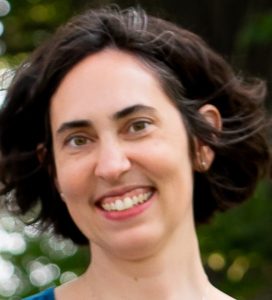
 Margaret Kalcic’s research is in the area of watershed hydrology with a particular focus on water quality in agricultural regions. Before taking a faculty position at UW-Madison she completed her undergraduate degree focused on Bioengineering at F. W. Olin College of Engineering, her Master’s and Ph.D. in Ecological Engineering at Purdue University, a postdoc at the University of Michigan, and a faculty position at OSU. Since 2013 she has worked on decision support tools and watershed modeling in the western Lake Erie watersheds and the Great Lakes Region as a whole, to encourage policy – and agricultural decision-makers to incentivize and adopt effective conservation measures to tackle nutrient goals. She has a broad and applied research program spanning water quality modeling, geospatial analysis, stakeholder engagement, ecosystem services, and field-scale monitoring of conservation effectiveness.
Current Members
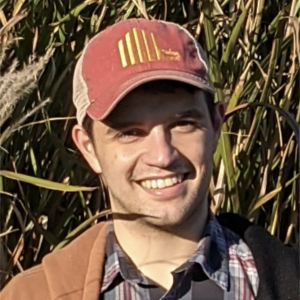 Andrew Hillman is a PhD student in the Nelson Institute for Environmental Studies. He completed his degree in Biological Systems Engineering at Iowa State University, a Master’s in Biological and Agricultural Engineering from North Carolina State University and is passionate about questioning what agriculture has to look like in the US Midwest to move towards something that is sustainable from a land use and water quality perspective.
Andrew’s research focuses on bridging the gap between the physical and social sciences as it relates to agricultural non-point source pollution issues. His project is investigating how social indicators and decision making of farmers/producers drives nutrient loading in a small watershed in southwest Wisconsin. He hopes to be able to use this project to connect watershed modeling, social science, and policy together.
In the future, Andrew is interested in working on the boundary between watershed science and policy. Potential fields he is interested in are government agencies, non-profits, and potentially extension.
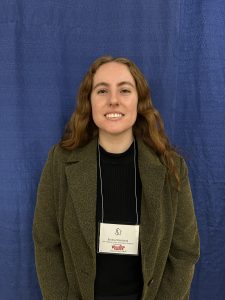 Emma Strickland is a master’s student in Biological Systems Engineering. Emma’s research focuses on improving how winter runoff is estimated in the Wisconsin Phosphorus Index (WPI). The WPI is a tool used to assess how vulnerable agricultural fields are to phosphorus loss and has been integrated into the SnapPlus software to improve nutrient management planning for croplands.
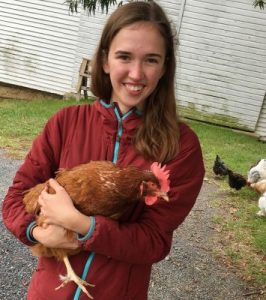 Jaya Hafner is a master’s student in Agroecology. After earning a double B.S. in Biology and Environmental Studies from the University of Utah, Jaya worked for a startup, FarmRaise, for two years. In this role, she helped farmers apply for funding to implement conservation practices and develop an application to help them manage their farm finances. Her childhood in Iowa and experience at FarmRaise have made her passionate about helping working lands coexist with healthy watersheds.
Jaya’s research focuses on improving the simulation of agroecosystems within the Soil and Water Assessment Tool (SWAT) through source code modification and building a single-field SWAT model. She is working to improve SWAT’s representation of cold season hydrology by modifying the model’s source code to enhance soil temperature simulation.
Research Scientist & Post-doctoral researchers
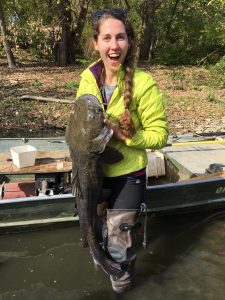 Anna Apostel is a postdoctoral scholar at UW-Madison in the Biological Systems Engineering Department and was previously a postdoctoral scholar the Ohio State University in the Food, Agricultural, and Biological Engineering Department. She received her B.S. degree in Biology at Denison University and an M.S. in Civil and Environmental Engineering at The Ohio State University working on the identification of model equifinality and uncertainty quantification in Total Maximum Daily Load (TMDL) development. Her current research focuses on Harmful Algal Blooms in Lake Erie’s Western Basin and watershed modeling of the Maumee River using the Soil Water Assessment Tool (SWAT).
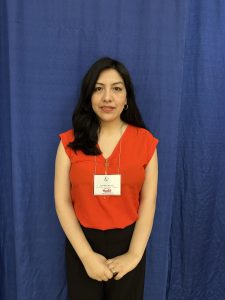 Lourdes Arrueta Antequera is a postdoctoral scholar in the Department of Biological Systems Engineering at UW–Madison. She earned her bachelor’s degree from Zamorano University and completed her M.Sc. and Ph.D. in Environmental Sciences at Ohio State University. Her M.Sc. work examined how well hydrological models represent farmers’ behaviors, emphasizing how assumptions about behavioral and physical variability can significantly influence simulated nutrient loads in the Maumee River Watershed, Ohio. Her Ph.D. research combined field experiments and hydrological modeling to assess the impact of conservation practices, such as integrating perennial crops into annual crop rotations, on subsurface discharge and nutrient losses in northwest Ohio.
Her current research focuses on improving the simulation of water and phosphorus transport to tile drainage in the Soil and Water Assessment Tool (SWAT). Tile drainage is widely used in regions with poorly drained soils, such as the U.S. Corn Belt, where tile drains have been extensively installed to remove excess water and improve crop productivity. Although nutrient transport via surface runoff is reasonably well represented in commonly used models, nutrient transport to tile drainage is often ignored or poorly represented. Therefore, her work aims to improve the representation of shallow water table dynamics, cold-season hydrological processes, and the water and phosphorus movement through both macropore and soil matrix flow pathways.
Previous Lab Members
Elizabeth Callow Master’s Student
Elizabeth Schwab Master’s Student
Ashlee Balcerzak Master’s Student
Dr. Haley Kujawa Ph.D. Student
Dr. Vinayak Shedekar Research Scientist
Dr. Asmita Murumkar Postdoctoral Scholar
Dr. Sushant Mehan Postdoctoral Scholar
Dr. Laxmi Prasad Postdoctoral Scholar
Dr. Grey Evenson Postdoctoral Scholar
Dr. Xioqiang Liu Postdoctoral Scholar
Ethan Rice Undergraduate Student